
 Written by
 In a world where artificial intelligence has already transformed how we communicate, work, and create visual content, the next frontier is sound — and Google just took a giant leap forward. The tech giant has introduced Lyria 3, its most advanced AI music generation model yet, now integrated into the Google Gemini app.
This isn’t just another feature update — it’s a cultural shift that puts music creation into the hands of everyone, whether you’re a filmmaker scoring your next video, a content creator looking for original tracks, or simply someone who wants to turn a photo into a soundtrack. But what exactly is Lyria 3, how does it work, and why should you care? Let’s break it down in depth.
🧠 What Is Lyria 3?
Lyria 3 is Google DeepMind’s latest music generation model, designed to convert simple inputs — like words, images, and even videos — into high-quality 30-second musical compositions. It goes beyond mere sound bites: the model can generate instrumentals, vocals, and even original lyrics based on the emotional tone, genre, or mood you specify.
Found directly inside the Gemini app — Google’s powerful AI ecosystem — Lyria 3 combines cutting-edge machine learning with creative freedom. It’s available in beta to users aged 18 and above and supports multiple languages including Hindi, English, Spanish, French, German, and more.
🎙️ How Lyria 3 Works — A Technical Breakdown
At its core, Lyria 3 uses advanced neural networks that have been trained on vast amounts of musical data. This lets it understand:
- 🎼 Genre and Style: From pop and jazz to lo-fi and rock.
- 🥁 Mood and Tempo: Whether you want calm background music or a high-energy beat.
- 🎤 Lyrics and Vocals: AI-generated words that match the emotional cue in your prompt.
- 📸 Multimodal Inputs: Upload a photo or video and Lyria 3 will compose music that “fits” the vibe.
All tracks are 30 seconds long, ideal for social media, shorts, intros, and other creative formats where bite-sized music makes a big difference. Each track can also get custom cover art generated within the app, making it easier than ever to share and publish your creations.
✍️ Creating Music With Words, Pictures, or Video
One of the coolest things about Lyria 3 is how accessible it is:
📝 Text Prompts
Just describe what you want — for example:
- “Create a fun Afrobeat track celebrating friendship.”
- “Make a chill piano-led tune with soft vocals about a rainy afternoon.”
The AI will interpret your text and generate a corresponding track.
📷 Images
Drop a photo — maybe of your pet, a scenic landscape, or something personal — and Lyria 3 will create music that reflects the energy and mood of the image.
🎥 Video Clips
Upload a short video and let the AI compose a soundtrack that fits everything from the pacing to the emotion captured in your visuals.
This is a huge leap from traditional music creation tools which often require deep musical knowledge or expensive software.
How to Use Lyria 3
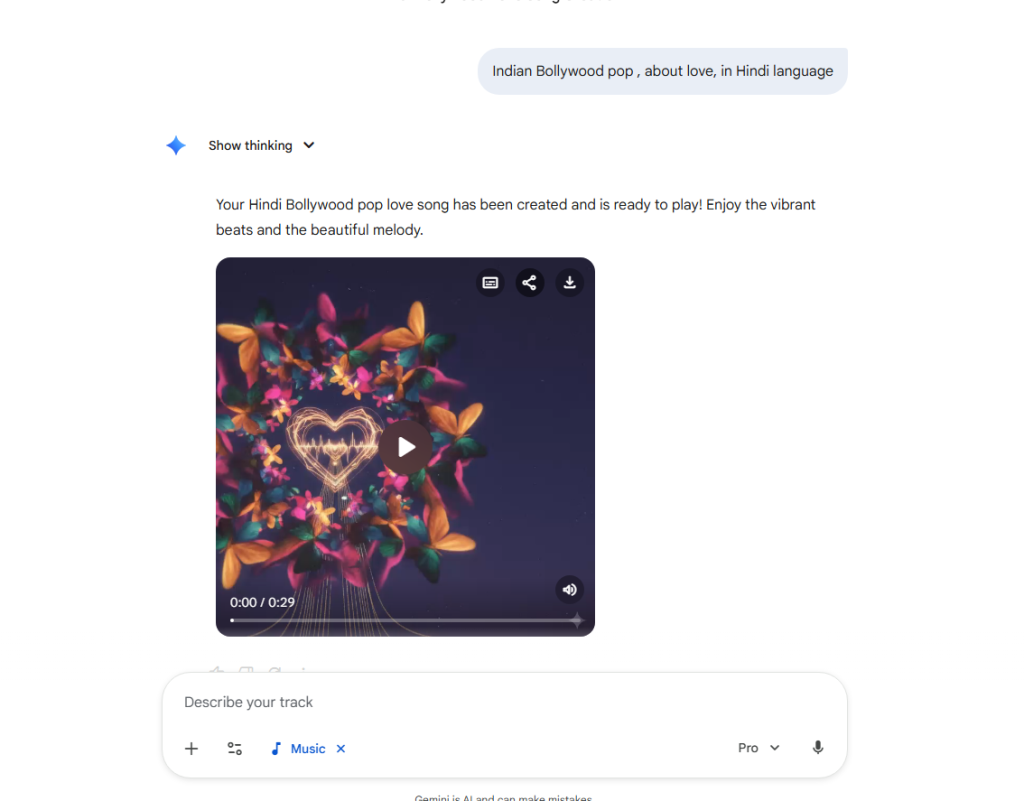
You can use Lyria 3 directly from the Google Gemini interface, making AI music creation incredibly simple and accessible. Open the Gemini app or web interface, switch to the music generation feature (available in supported regions), and choose the Lyria 3 option. From there, you can type a detailed prompt describing the genre, mood, instruments, tempo, and even lyrics you want—such as “Create a high-energy Hindi pop track about chasing dreams with electronic beats and female vocals.”
You can also upload an image or short video, and Lyria 3 will compose a 30-second soundtrack that matches the vibe and emotion of your content. Once generated, you can preview the track, regenerate variations, refine your prompt for better results, and download or share the final output directly. Since it’s fully integrated inside Gemini, there’s no need for external software, DAWs, or complex setup—just describe your idea, and Lyria 3 transforms it into music within seconds.
🌍 Why Lyria 3 Matters Globally
Here’s what makes Lyria 3 truly impactful:
✅ Democratizing Music Creation
For decades, creating music has involved instruments, studios, software, and production know-how. Now, anyone with a phone and a creative idea can produce original music.
✅ Multilingual Support
With support for languages including Hindi, Lyria 3 caters to creators not just in North America and Europe, but across Asia, Africa, and beyond.
✅ Social and Cultural Integration
Imagine composing:
- • A song to match your travel memories.
- • Original soundtracks for YouTube Shorts.
- • Personalized ringtones or jingles for small business promos.
This is creativity — human emotion meeting algorithmic expression.
Copyright & Responsible AI: Google’s Approach
One common criticism of AI music tools is the risk of copyright infringement. Google addresses this by embedding a watermark called SynthID into every AI-generated track. This invisible marker helps track and identify pieces as AI-generated — a step toward transparency and authenticity in a world of deepfakes and cloned sounds.
Google also clarifies that Lyria 3 is meant for original expression, not copying specific artists. If you include an artist’s name in a prompt, the model uses it as creative inspiration, not a direct imitation.
💡 Creative Use Cases: Beyond the Basics
Here are some exciting ways creators are already using Lyria 3:
🎥 Content Creators
Add original soundtracks to Instagram and TikTok videos.
🎤 Bloggers & Podcasters
Generate intros, interludes, or background music without licensing headaches.
🎬 Short Films
Score emotional moments with custom mood music that aligns with your narrative.
🎮 Indie Developers
Use custom AI music as ambient tracks in games or apps.
🚀 Lyria 3 vs. Other AI Music Tools
AI music generation is a hot market. Competitors like Suno and Udio have been exploring text-to-music long before Lyria 3’s launch.
But Google’s edge lies in:
- 📱 Seamless integration with Gemini
- 🎤 Multimodal inputs (text + images + video)
- 🌐 Broad language support
- 🖼️ Built-in cover art generation
- 🧠 High fidelity outputs aimed at creative expression
It’s not just about making music — it’s about making music more human.
Google Lyria VS Suno AI
| Feature / Attribute | Suno AI | Google Lyria 3 |
|---|---|---|
| Developer | Suno (independent AI music company) | Google DeepMind / Gemini integration |
| Primary Use Case | Full-song generation with vocals, melodies, harmonies from text prompts | 30-second music tracks from text, images, or video, with AI-generated lyrics, mood, and sound tailored to prompts |
| Output Length | Full-length songs (varies based on prompt and generation setting) | Up to ~30 seconds (current beta feature) |
| Music Style / Genres | Wide genre support with expressive vocal and production layers | Generation across styles and moods, designed for short creative clips |
| Input Types | Text prompts, potentially audio inputs; supports lyrics + music creation | Text descriptions, images, or videos to set mood/genre/scene |
| Lyrics & Vocals | Yes — strong focus on vocal tracks with clear vocals | Yes — automatically generated based on prompts and mood |
| Ease of Use | Accessible web interface; music creation with intuitive prompts | Integrated directly into Gemini’s AI chat/assistant interface |
| Customization & Control | Offers more detailed editing and genre customization (especially in advanced versions or studio tools) | Focused on quick, on-the-fly generation with some style controls in prompt |
| Watermark / Attribution | No specific watermark mentioned (licensing approaches evolving) | Uses SynthID watermark for AI-generated music identification |
| Access & Integration | Independent AI platform (web / mobile apps, API ecosystems) | Built into Google’s Gemini app and connected services like YouTube’s Dream Track |
| Target Audience | Musicians, creators, producers, and general music enthusiasts | Social media creators, casual users, and Gemini users seeking quick musical clips |
| Strengths | Produces more radio-ready full songs with detailed vocal and instrumental layers | Highly accessible, multimodal prompt support (text/image/video), easy music generation as part of AI assistant tasks |
| Limitations | Some license/legal issues and output may sound synthetic for certain styles | Limited to ~30-second tracks and currently beta, not designed for long compositions |
Final Thoughts: The Sound of Tomorrow
Lyria 3 isn’t just a new feature in an app — it represents a paradigm shift in how we think about creation. Today, anyone can turn an idea into sound. Tomorrow, we might see AI culture ecosystems where music, visuals, words, and interactivity blend seamlessly.
Whether you’re a musician looking for inspiration, a marketer needing custom soundtracks, or someone just curious about the future of AI creativity, Google’s Lyria 3 is your new playground.
Welcome to the age where words become music — one prompt at a time.