
 Written by
 In the last few years, building a website has gone from a complex technical task to something almost magical. In 2026, artificial intelligence has completely changed how websites are created. Instead of spending days coding layouts, designing UI, and configuring hosting, I can now describe my idea in plain English and watch an AI generate a working website within minutes.
As someone who runs multiple online projects and experiments with tech tools regularly, I’ve tested several AI website builders. Some of them are incredibly powerful and feel like having a team of developers working for you. Others are still experimental but show where the future of web development is heading.
Why AI Website Builders Are Exploding in 2026
When I first started building websites years ago, the process was slow and technical. You needed to know HTML, CSS, hosting, domain configuration, and sometimes backend programming. Even with CMS platforms like WordPress, designing something unique often required plugins, themes, and custom code.
AI changed that completely.
Modern AI website builders can now generate layouts, write content, create images, configure hosting, and deploy a website automatically. In many cases, all you need to do is type something like:
“Create a website for a fitness coach with booking and blog.”
Within minutes, you get a working site.
These tools combine large language models, design automation, and code generation to produce production-ready websites and web apps quickly.
For entrepreneurs, creators, and startups, this means ideas can move from concept to live product much faster than ever before.
But not all AI website builders work the same way.
Some tools focus on design and simplicity, while others focus on developer-level control and code generation.
Let me walk you through the most interesting ones I’ve personally tried.
Lovable AI – The Website Builder That Feels Like Magic
The first time I used Lovable, I genuinely felt like the future of web development had arrived.
Lovable is an AI-powered application and website builder that turns simple text prompts into full-stack applications. Instead of writing code manually, you describe the app or website you want, and the AI builds it for you.
When I first tested it, I simply wrote:
“Build a SaaS landing page with pricing section and login system.”
Within seconds, Lovable generated a complete web application structure. It had authentication, UI components, and even a clean modern layout.
What impressed me most was the balance between simplicity and power. Unlike many no-code tools, Lovable doesn’t lock you into a rigid interface. You can edit the design visually or dive into the generated code if you want more control.
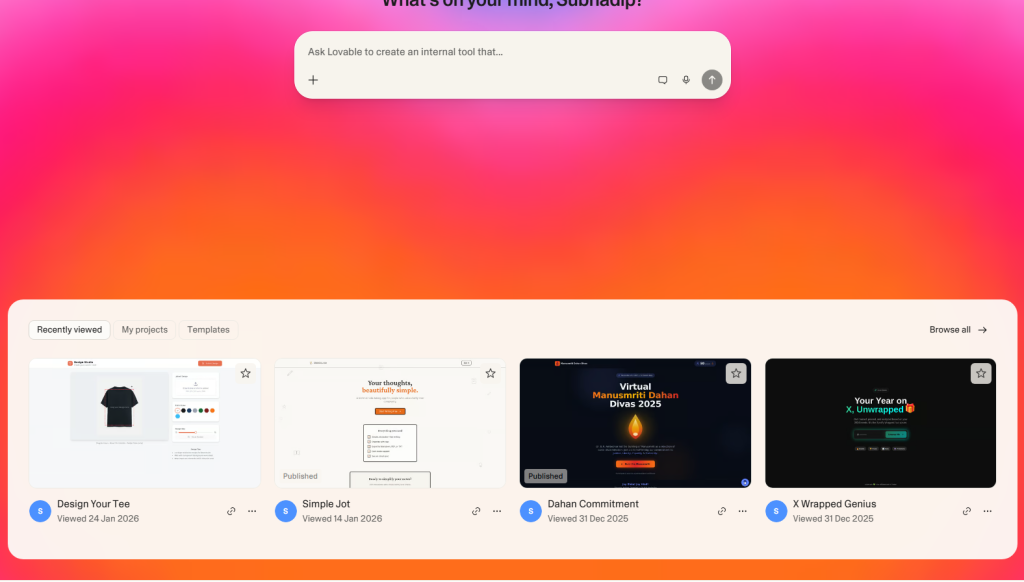
The platform typically uses technologies like React and Supabase behind the scenes, which means the applications it generates are not just prototypes—they can actually scale.
I noticed that Lovable is especially great when you want to build a startup MVP quickly. Many founders now use it to create demos or early versions of products before hiring developers.
However, Lovable still has limitations. Sometimes the AI struggles when you request complex functionality, and you may need to guide it through multiple prompts to get the desired result.
But overall, Lovable feels like one of the most exciting AI builders available today.
Bolt.new – The Fastest AI Builder I’ve Used
Bolt.new feels different from Lovable. Instead of focusing primarily on visual building, Bolt feels more like an AI-powered coding environment that helps you create full web applications quickly.
When I first opened Bolt, the interface reminded me of a developer tool rather than a traditional website builder. But the AI capabilities quickly changed that perception.
Bolt allows you to describe what you want to build, and the AI generates code, tests it, refactors it, and even iterates automatically to improve the result.
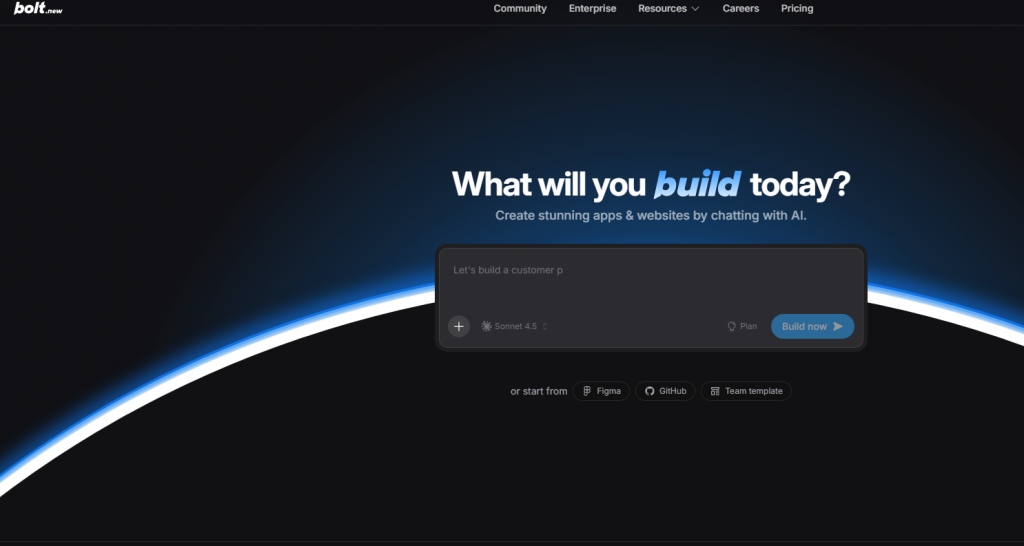
One of my favorite features is how quickly Bolt generates working prototypes. I once asked it to build a “portfolio website with blog and contact form,” and within minutes it created a full working project structure.
The platform is particularly appealing for developers or technical users who want control over the code but still want AI to speed up development.
Compared to Lovable, Bolt feels more technical. It’s not always the easiest platform for beginners, but if you know basic development concepts, it becomes incredibly powerful.
Bolt is also known for reducing coding errors because its AI agents automatically test and refactor the generated code.
For indie hackers and startup founders who like experimenting with AI coding tools, Bolt is definitely one of the most exciting options available today.
Hostinger AI Website Builder – The Simplest Option for Beginners
Not everyone wants to generate React apps or edit code. Sometimes you just want a simple website that works.
That’s where Hostinger’s AI website builder shines.
Among all the tools I tested, Hostinger’s builder is the most beginner-friendly. The entire process feels like a conversation with an AI assistant.
You simply describe your website idea, select a few design preferences, and the system automatically generates a complete website.
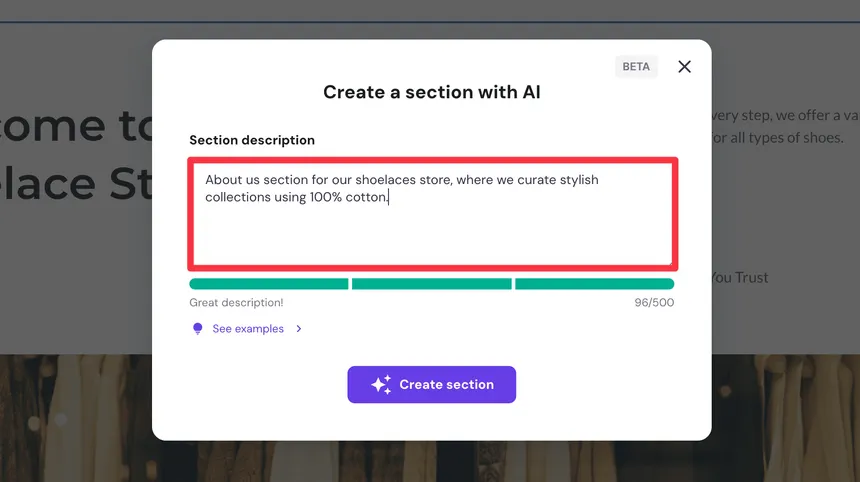
The AI doesn’t just create layouts—it also writes content, suggests images, and optimizes the structure for SEO.
When I tested it, I created a small business website in under five minutes.
What I really liked was how polished the result looked without any manual design work. For people launching small businesses, blogs, or portfolio sites, this kind of automation saves a lot of time.
However, Hostinger’s builder isn’t meant for complex web applications. If you want advanced customization or backend logic, tools like Lovable or Replit will be better.
But for beginners who want a professional website quickly, Hostinger is one of the easiest AI builders available today.
Replit AI – The Full Development Environment
Replit is a completely different type of AI website builder.
Instead of being just a builder, it’s a full development environment powered by AI.
When I first started using Replit’s AI features, I realized it’s designed for people who want to build real applications, not just static websites.
Replit’s AI agent can generate code, configure databases, integrate APIs, and deploy applications directly from the browser.
One of the biggest advantages of Replit is that it supports full-stack development, including backend logic and authentication systems.
That means you can build real SaaS products, dashboards, and web applications using the platform.
Another thing I like about Replit is its collaborative environment. Multiple developers can work on the same project simultaneously, similar to how Google Docs works for documents.
For teams or startups, this makes it incredibly useful.
However, Replit can feel overwhelming if you’re a complete beginner. It’s not as simple as tools like Hostinger or Wix AI.
But if you’re comfortable experimenting with code and want a powerful AI development platform, Replit is one of the best tools available.
Vercel v0 – The UI Generation Machine
Vercel’s v0 is one of the most fascinating AI tools I’ve used.
Instead of building entire websites automatically, v0 focuses specifically on generating UI components.
You describe a design, and the AI generates React and Next.js code that can be integrated directly into your project.
For example, I once asked it to create:
“a modern dashboard layout with sidebar navigation and analytics cards.”
Within seconds, v0 produced a beautiful interface built using modern frontend frameworks.
What makes v0 powerful is its deep integration with the Vercel ecosystem and support for multiple AI models.
For developers who already work with React and Next.js, v0 feels like a design partner that can generate complex UI components instantly.
However, v0 is not a full website builder on its own. It focuses mainly on frontend components, so backend features still require other tools.
Even with that limitation, it’s one of the most impressive AI design tools I’ve tried.
Google Antigravity – The Future of AI Development
Google Antigravity might be the most futuristic tool on this list.
When I first heard about it, I thought it was just another AI coding assistant. But after exploring it, I realized it’s something much bigger.
Antigravity is essentially an AI-powered development environment built on top of VS Code. It integrates AI agents directly into the coding workflow.
These agents can understand what you want to build, break tasks into steps, generate code, and even test the application automatically.
What makes Antigravity unique is its multi-agent architecture. Instead of a single AI assistant, multiple AI agents collaborate to handle different tasks such as planning, coding, debugging, and testing.
The system is powered by advanced models like Gemini, and developers can even choose different models depending on the task.
In my opinion, Antigravity is less of a “website builder” and more of an AI development platform.
But it shows where the industry is heading.
In the future, developers might simply describe what they want to build, and AI systems like Antigravity will handle the entire development process.
Which AI Website Builder Should You Choose?
After testing all these tools, I realized something important.
There isn’t a single “best” AI website builder. The best one depends on what you want to build.
- If you’re a beginner who just wants a quick website, tools like Hostinger AI are perfect.
- If you want to build startup prototypes quickly, Lovable or Bolt are excellent choices.
- If you’re building a serious web application, Replit offers the most powerful environment.
- For frontend developers who want AI-generated UI components, Vercel v0 is amazing.
- And if you’re curious about the future of AI development, Google Antigravity is definitely worth exploring.
Final Thoughts
AI website builders in 2026 have transformed how websites and applications are created.
What once required weeks of coding can now happen in minutes with the help of AI.
After experimenting with several of these platforms, I genuinely believe we are entering a new era of software development where the barrier to building digital products becomes almost zero.
Entrepreneurs, creators, and developers can now turn ideas into working websites faster than ever before.
And the best part? This technology is still evolving.
If AI builders are this powerful today, I can only imagine how incredible they will become in the next few years.